

Common Home Safety Mistakes That Put Australian Families at Risk
Most people assume their home is safe. The smoke alarm is on the ceiling, the exits are technically accessible, and nothing has gone wrong yet, so everything must be fine. But the reality is that the most dangerous home safety risks rarely announce themselves. They hide in small, everyday oversights that quietly stack up until an emergency makes them impossible to ignore.
Here's what Australian families are most commonly getting wrong, and what you can do to fix it before it matters.
1. Missing or Poorly Placed Smoke Alarms
Under Australian law, smoke alarms are mandatory in all residential properties, but having one isn't the same as having the right one in the right place. Many households have alarms installed only in hallways, missing bedrooms where fires can start and spread while occupants are asleep. Others have ionisation-type alarms that are slower to detect slow-burning, smouldering fires, the most common type in Australian homes.
What to do instead: Install photoelectric smoke alarms in every bedroom, outside sleeping areas, and on every level of the home. In Queensland, New South Wales, and Victoria, updated legislation now mandates interconnected photoelectric alarms in new builds and major renovations, a standard worth adopting in any home regardless of age.
2. Not Testing Alarms Monthly
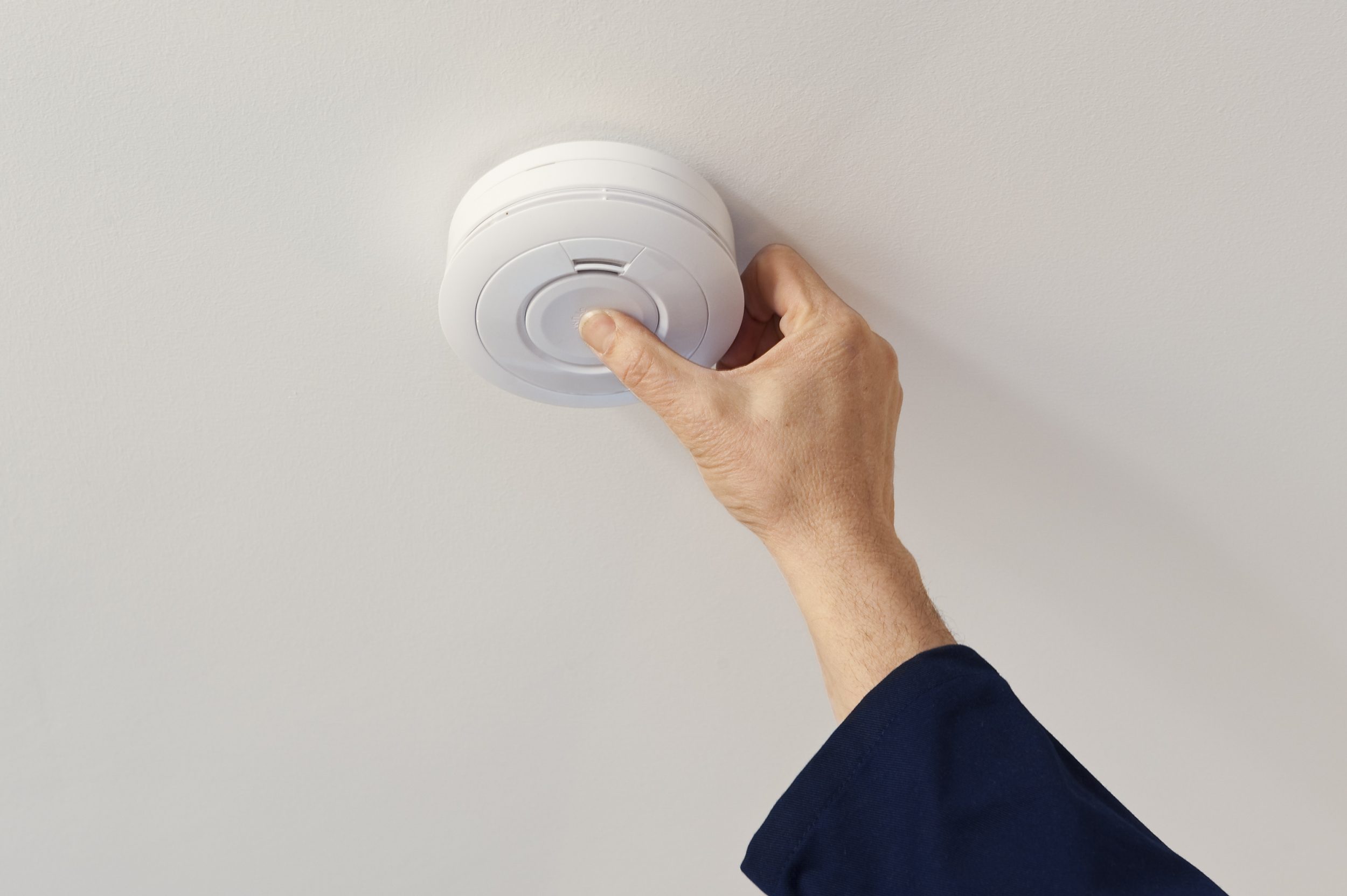
A smoke alarm with a flat or missing battery is worse than no alarm at all, it creates a false sense of security. Research by Fire and Rescue NSW found that a significant proportion of homes involved in fatal fires either had no working smoke alarm or had one that failed to activate.
What to do instead: Test every alarm in your home on the first day of each month. Make it a household habit. If an alarm chirps or fails to sound during testing, replace the battery immediately or replace the unit if it's more than ten years old.
3. Ignoring Expired Devices
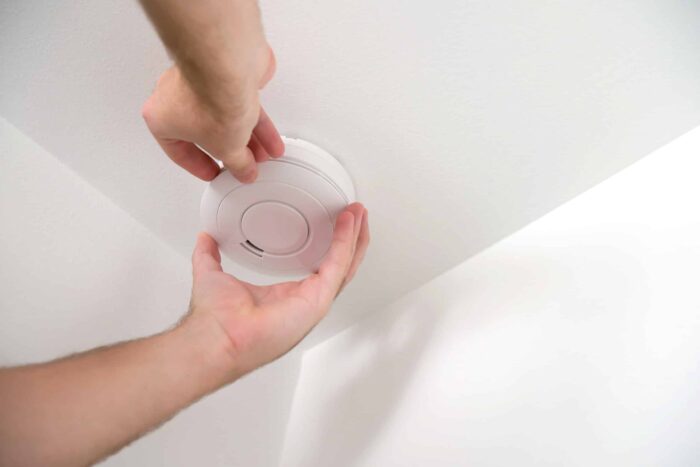
Smoke alarms have a finite lifespan, typically ten years from the date of manufacture (not installation). After this point, the internal sensors degrade and the device may fail to detect smoke even when it appears to be functioning normally. Many Australian households are unknowingly running expired alarms without realising it.
What to do instead: Check the manufacturer’s date printed on the back of each alarm. If it's approaching or past the ten-year mark, replace it immediately. 10-year sealed battery alarms are an excellent low-maintenance option the battery lasts the full life of the device, eliminating the risk of a dead battery during an emergency.
4. Overloaded Power Boards

Electrical faults are one of the leading causes of house fires in Australia, and overloaded power boards are a major contributor. Daisy-chaining power boards (plugging one into another), running high-draw appliances like heaters or air fryers through a single board, or using cheap unrated extension leads are all common habits that significantly increase fire risk.
What to do instead: Use power boards with built-in surge protection and overload switches. Never daisy-chain boards and avoid running high-wattage appliances through extension leads. If you find yourself consistently running out of outlets in a room, consult a licensed electrician about installing additional wall sockets, it's a small cost compared to the risk.
5. Blocked Fire Exits
In the chaos of an emergency, every second counts. Yet many Australian homes have exits obstructed by furniture, stored boxes, overgrown landscaping near windows, or security screen doors that are difficult to open quickly from the inside. What feels like a minor inconvenience on an ordinary day becomes a life-threatening obstacle during a fire.
What to do instead: Walk through your home and identify every possible exit from each room, including windows. Ensure all exits can be opened quickly and easily, including by children. Security screens should have quick-release mechanisms, and hallways should remain clear of clutter at all times.
6. Unsafe Cooking Habits
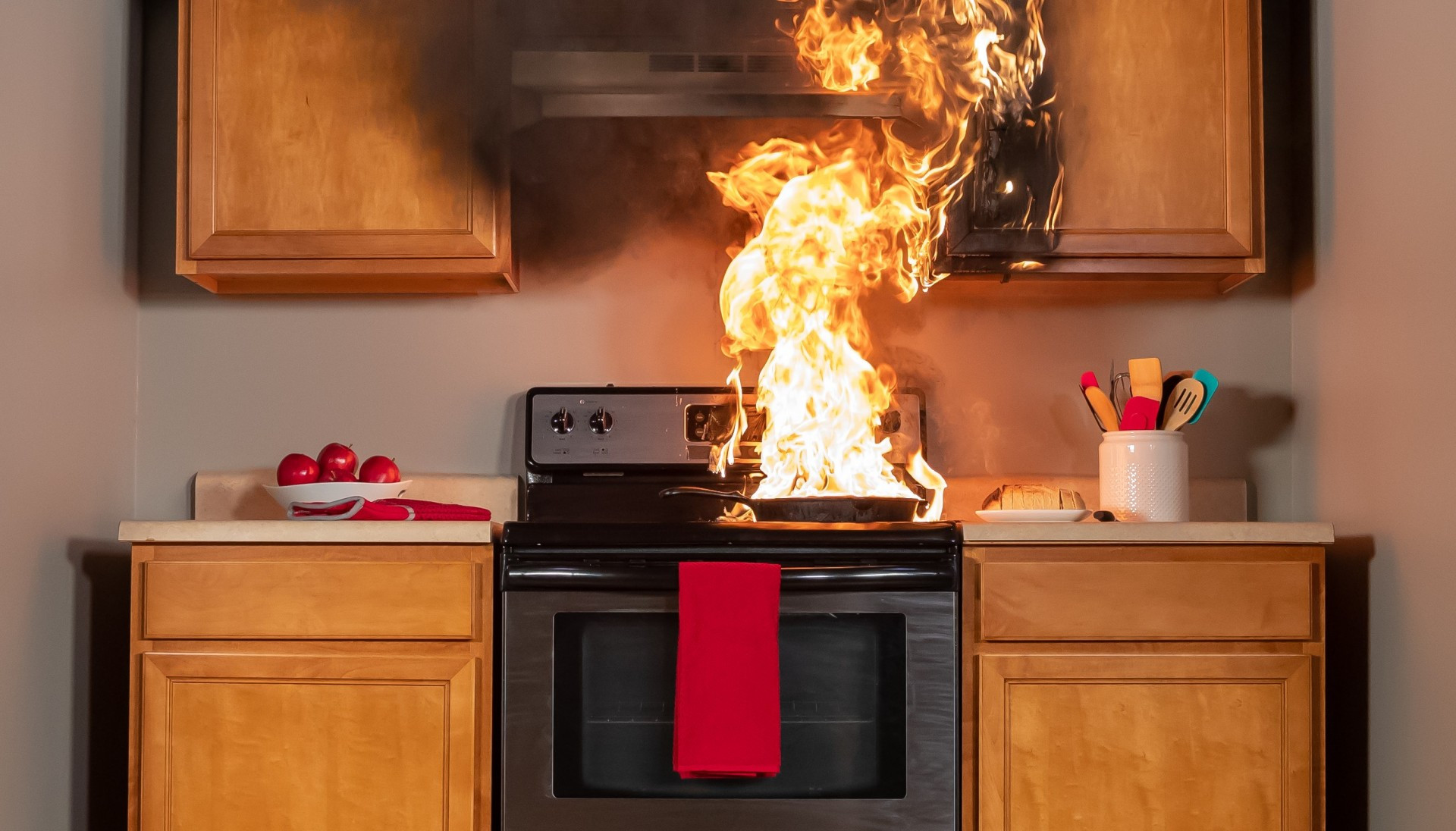
Cooking is the single leading cause of house fires across Australia, accounting for nearly half of all residential fire incidents according to the Australian Institute of Health and Welfare. Leaving food unattended on the stove, cooking with high heat and flammable oils, and placing tea towels or paper near burners are all everyday habits that can escalate quickly.
What to do instead: Never leave the stove unattended while cooking, especially when using oil. Keep a lid nearby to smother a pan fire. Never use water on a grease fire. Install a smoke alarm within three metres of the kitchen (but not directly above the cooktop to avoid false alarms) and consider a kitchen fire extinguisher or fire blanket as a first-response tool.
7. Lack of an Emergency Plan

Ask most families what they'd do if a fire broke out at 2am and you'll get hesitation. Most households have no established evacuation plan, no designated meeting point, and no practice run meaning the first time they'd work through the process is during an actual emergency, when panic and smoke make clear thinking nearly impossible.
What to do instead: Create a simple home fire escape plan with your household. Identify two exit routes from every room, establish a clear outdoor meeting point (the front letterbox, a neighbour's driveway), and practice the plan at least twice a year — including at night when visibility is reduced. Make sure every family member, including children, knows what to do when they hear the alarm.
Why These Mistakes Matter
None of these oversights are dramatic on their own. That's exactly what makes them dangerous. A smoke alarm that hasn't been tested in two years, a power board running one too many appliances, an exit that's slightly harder to open than it should be, individually, each feels manageable. Together, they can mean the difference between a household that evacuates safely and one that doesn't.
The good news is that every single one of these risks is preventable with relatively simple, low-cost action.
Product Recommendations
If you're ready to address these risks, here's where to start:
- Interconnected Smoke Alarm Systems — When one alarm detects smoke, every alarm in the home sounds simultaneously. This is critical in larger homes or multi-storey properties where a fire in one area might not be heard in another. Interconnected systems are now a legal requirement in many Australian states for new builds and are the single most effective upgrade any household can make.
- 10-Year Sealed Battery Smoke Alarms — Eliminates the most common point of failure: a dead or missing battery. The sealed battery is designed to last the full decade lifespan of the alarm, making it ideal for rental properties, high ceilings, or anyone who wants set-and-forget reliability.
- Smart Smoke Alarms with App Alerts — Sends real-time push notifications to your smartphone if smoke is detected, even when you're not home. Particularly valuable for investment property owners, frequent travellers, or households with elderly residents who may not hear a standard alarm.
- Fire Safety Starter Kits (Multi-Alarm Packs) — A cost-effective way to upgrade whole-home coverage in one purchase. Ideal for families moving into a new property, completing a renovation, or simply doing a compliance audit of their existing setup.
The single most impactful upgrade for most Australian homes: interconnected photoelectric smoke alarms in every bedroom, hallway, and level of the property.
Frequently Asked Questions
What are the most common home safety mistakes Australian families make?
The most widespread issues are inadequate smoke alarm placement, failure to test alarms regularly, and electrical hazards from overloaded power boards. Many households also underestimate the risk of cooking-related fires and lack a practiced evacuation plan. These mistakes are individually minor but collectively create conditions where a small incident can escalate rapidly.
How often should smoke alarms be tested?
Monthly testing is the standard recommendation from fire authorities across Australia. The simplest approach is to pick a consistent date the first of the month works well and test every alarm in the home. If an alarm fails to sound or produces a weak tone, replace the battery or the unit immediately. Don't wait.
What causes most house fires in Australia?
Cooking is the leading cause, responsible for nearly half of all residential fires. Electrical faults, including faulty wiring, overloaded circuits, and damaged appliances, are the second most common cause. Heating equipment, particularly portable heaters placed too close to curtains or furniture, and cigarettes are also significant contributors. Notably, many electrical fires start inside walls or appliances and can burn for some time before becoming visible, which is why working smoke alarms are so critical.
A more and more common cause of fires is the overcharging of lithium batteries. These then cause the battery to combust and explode. More cases are popping up of e-scooters or e-bikes causing fires.
What type of smoke alarm is required in Australia?
Most Australian states and territories now mandate photoelectric smoke alarms for residential properties, replacing older ionisation models. Photoelectric alarms are more responsive to slow-burning, smouldering fires, the type most common in homes and produce significantly fewer false alarms from cooking or steam. Queensland has among the strictest requirements, mandating interconnected photoelectric alarms in all dwellings by 2027.
How long do smoke alarms last?
The standard lifespan of a smoke alarm is ten years from the date of manufacture. After this point, the internal sensors can degrade, and the device may no longer function reliably, even if it appears to work during testing. Always check the manufacture date printed on the back of the unit and replace any alarm approaching or past the ten-year mark.
What should I do if a fire starts in my kitchen?
If it's a small, contained pan fire, place a lid over the pan to cut off oxygen and turn off the heat never use water on a grease or oil fire, as this causes a dangerous flare-up. If the fire is spreading or you're uncertain, evacuate immediately, close doors behind you to slow the fire's spread, and call 000 from outside. Never re-enter a burning building. Having a fire blanket mounted near (but not directly above) the stove gives you an effective first-response option for small fires.